
Chariton County Probate Division
Probate in Chariton County is a division of the Circuit Court. The local court address is 306 S Cherry St, Keytesville, MO 65261, and the Circuit Court phone is 660-288-3602. The research did not identify a separate probate courthouse, separate probate clerk counter, or separate local probate website. Probate questions therefore route through the Circuit Clerk-Recorder listed on the county clerk-recorder page and the statewide Missouri court systems used for public docket summaries.
Probate covers more than a will. Chariton County probate records may involve estate administration, small estates or refusals of letters where allowed by Missouri law, guardianships, conservatorships, trusts when court action is filed, inventories, accountings, creditor notices, court orders, and letters of administration or testamentary. A public Case.net entry may show that a probate case exists, but the detailed file can include documents that are only available through the clerk or only available to authorized persons.
Probate Division of the Circuit Court
306 S Cherry St
Keytesville, MO 65261
660-288-3602
Division of the Chariton County Circuit Court
Chariton County Probate Terms
Probate files use words that are easy to misread. These terms help distinguish an estate case from a guardianship or conservatorship case before calling the Circuit Clerk or reviewing a Case.net docket.
- Testator
- A person who made a will.
- Executor
- A person named to carry out a will after court authority is granted.
- Intestate
- Dying without a valid will, so the estate follows legal distribution rules.
- Guardianship
- A court case appointing someone to make personal decisions for a minor or incapacitated person.
- Conservatorship
- A court case appointing someone to manage property or financial affairs for a protected person.
- Letters
- Court-issued proof that a personal representative has authority to act for the estate.
Search Chariton County Probate Records
The first online path for public probate summaries is Missouri Case.net. Search by party name, case number, filing date, attorney, and court or county filters when available. Case.net can help locate a probate case number, filing date, parties, division, docket entries, hearings, and public orders, but it should not be treated as a full document repository.
If the online search does not show the file, use the Circuit Clerk. Older paper files, non-digitized records, certified copies, exhibits, and restricted documents may require phone or in-person handling. For older estates, the Missouri State Archives county microfilm program may also matter because the Archives holds county microfilm that can include probate court material. The official Chariton County home page is also useful for county-office navigation before a courthouse visit.
- Search Case.net for the decedent, protected person, party name, or case number.
- Confirm that the court or county matches Chariton County or the 9th Judicial Circuit.
- Record the case number, filing date, and probate case type before contacting the clerk.
- Call 660-288-3602 for copies, certified documents, older probate files, or filing questions.
- Ask about Missouri State Archives microfilm if the record is historical or not held in modern court systems.
Note: Automated inspection of Case.net was blocked, so no sample Chariton County probate case was clicked or inspected.
Chariton County Probate Fees
No Chariton-specific probate fee schedule or probate form packet was located on the official county site. That matters for both new filings and copy requests. A person filing an estate, guardianship, conservatorship, refusal of letters, inventory, annual settlement, accounting, or final settlement should contact the Circuit Clerk before filing to confirm current local filing costs, accepted payment, and whether attorney filing is required.
| Probate Need | Where to Confirm | Research Finding |
|---|---|---|
| New probate filing | Circuit Clerk, 660-288-3602 | No local fee schedule found in the research file. |
| Certified probate copy | Circuit Clerk, 660-288-3602 | No certified-copy price list found on the county site. |
| Historical probate microfilm | Circuit Clerk and Missouri State Archives | Archives county microfilm may include probate court materials. |
| Guardianship or conservatorship filing | Circuit Clerk, 660-288-3602 | Access and filing details should be confirmed locally. |
Chariton County Probate Record Contents
A probate file can show different facts depending on the case type. An estate file may include the petition or application, will, orders, letters, inventories, appraisals, creditor notices, accountings, settlements, and closing documents. A guardianship or conservatorship file may include petitions, capacity-related filings, appointment orders, annual reports, financial accountings, and court oversight records.
Public access is narrower when the file involves a minor, protected person, or medical facts. A Case.net summary may only show a docket entry or case heading while the clerk keeps sensitive filings off public remote access. That is normal for probate work because the same division handles public estate administration and private protected-person issues.
| Field or Document | What It May Show |
|---|---|
| Case number | The court's tracking number for the probate matter. |
| Case type | Estate, guardianship, conservatorship, trust, or related probate filing. |
| Letters | Authority granted to a personal representative or fiduciary. |
| Inventory or accounting | Assets, money, or property reported to the court, subject to access limits. |
| Orders | Judge decisions authorizing appointments, distributions, or case closure. |
Restricted Chariton County Probate Records
Probate restrictions are important in Chariton County because estate files, guardianships, conservatorships, juvenile issues, and mental health matters can overlap. Missouri law protects several categories of court material. RSMo 211.321 makes juvenile court and law-enforcement juvenile records confidential with exceptions. RSMo 211.319 keeps specified abuse and neglect file materials confidential, even when some pleadings or orders may be public.
Mental health material can be especially restricted. RSMo 630.140 makes records and files maintained in proceedings under Chapter 632 confidential and available only to specified persons, such as the patient and counsel. Probate files may also redact Social Security numbers, full financial account numbers, confidential addresses, minor information, medical facts, and protected-person details.
The first probate restriction image in the manifest is sourced from the Missouri juvenile court record confidentiality statute at RSMo 211.321.
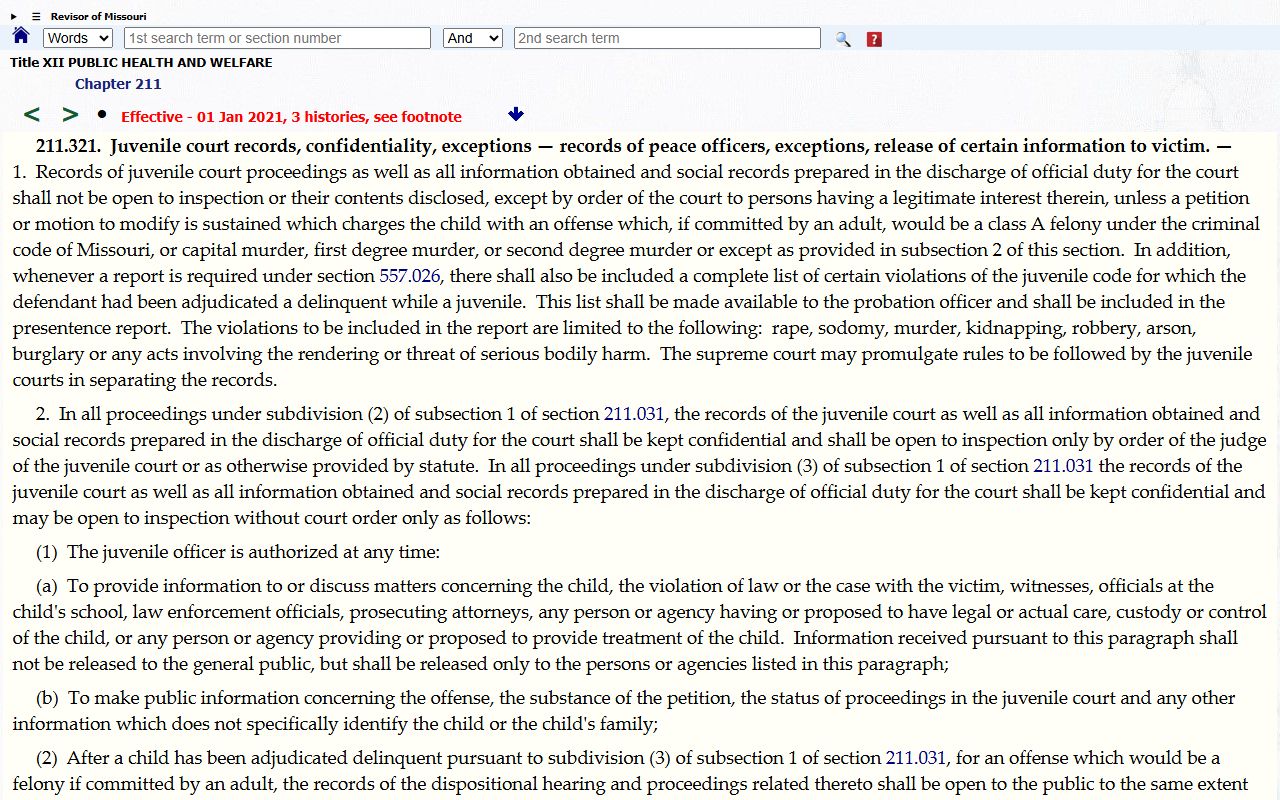
That statute matters when a probate-related matter touches a minor or juvenile court record rather than a routine adult estate.
The second restriction image comes from RSMo 211.319, which addresses public pleadings and confidential files in specified abuse and neglect proceedings.
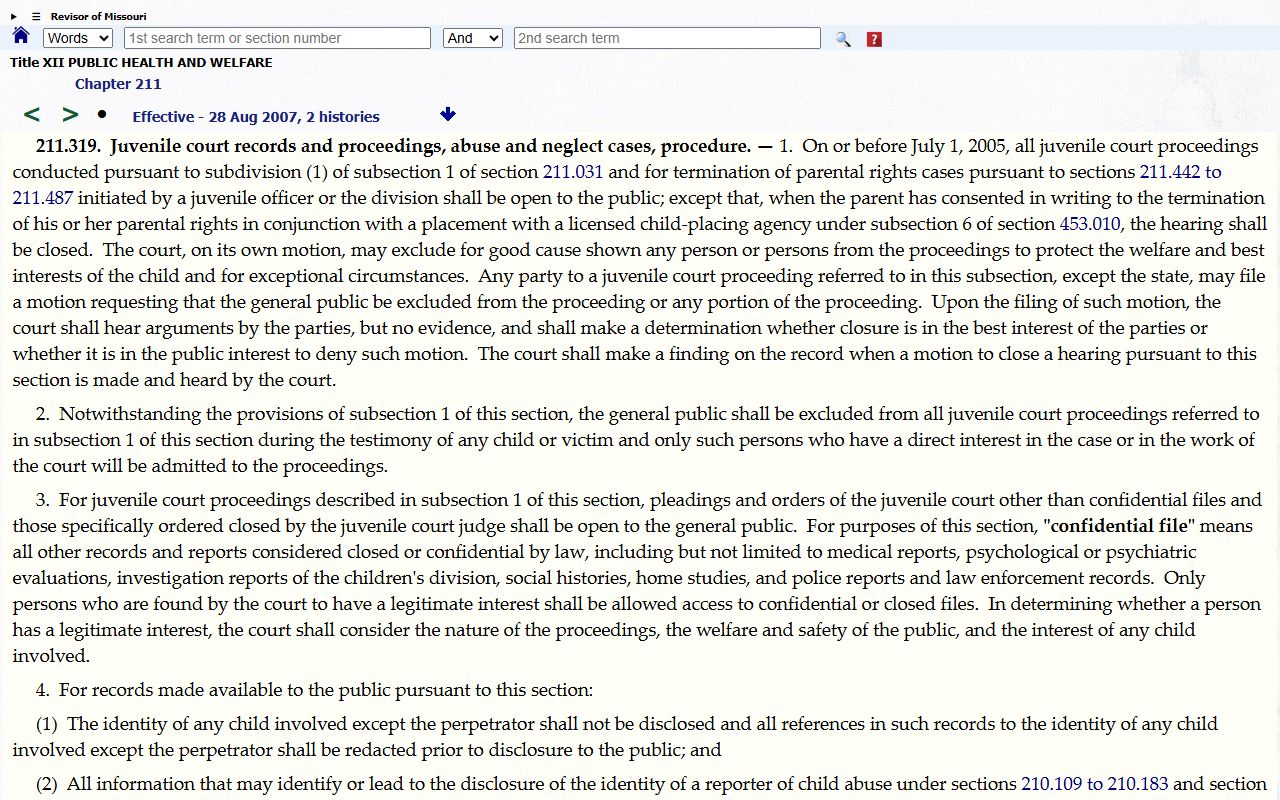
That rule explains why some related court materials may be visible while reports, evaluations, and agency records remain closed.
The mental-health confidentiality image is sourced from RSMo 630.140.
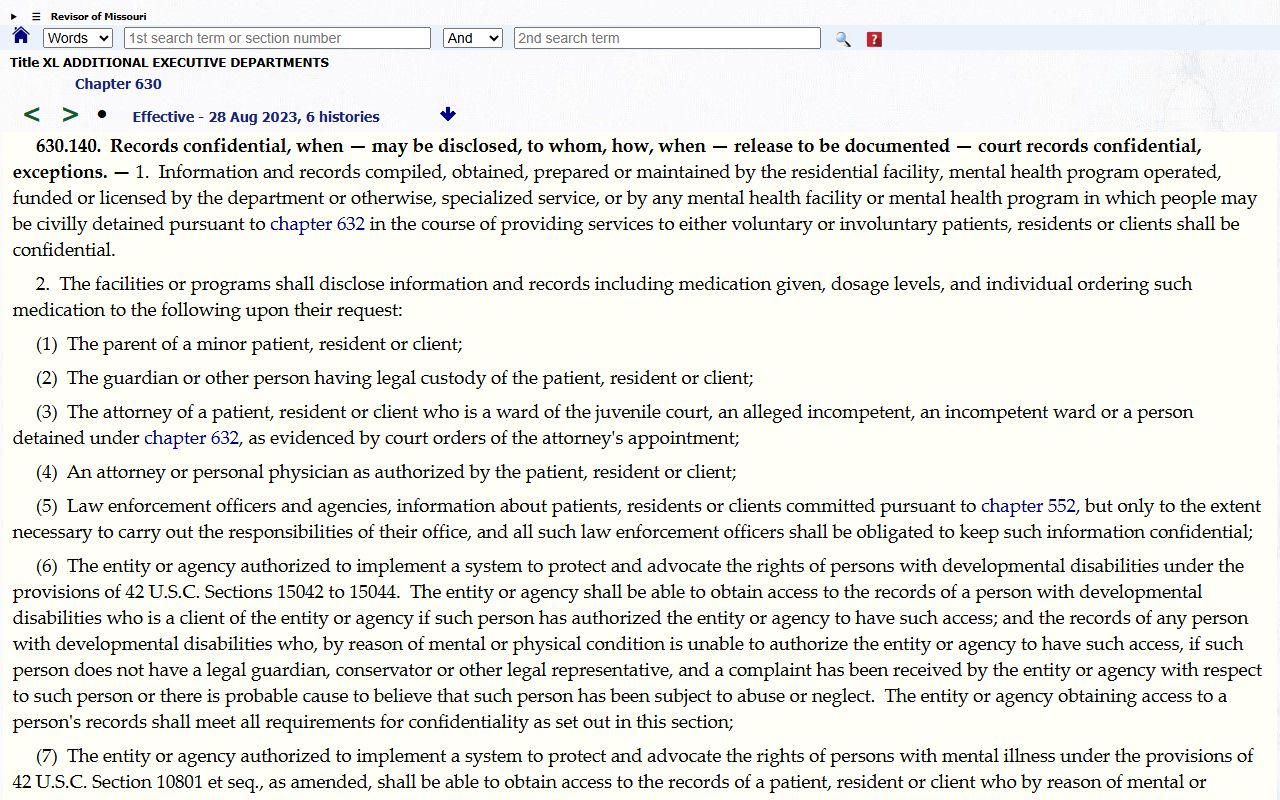
That statute is relevant when a protected-person or mental-health proceeding produces records that are not open to general public lookup.
File Chariton County Probate Matters
New probate work should begin with a local fit check. Determine whether the estate, guardianship, or conservatorship belongs in Chariton County based on residence, property, or the protected person's ties to the county. Then contact the Circuit Clerk to confirm local filing rules, fees, required originals, copy needs, and whether attorney filing is required.
- Identify the probate case type and the person's Chariton County connection.
- Search Case.net to see whether a related probate case already exists.
- Call the Circuit Clerk at 660-288-3602 before filing new pleadings.
- File the petition, application, will, or required documents through the Circuit Court process.
- Follow any court order for notices, inventory, accounting, settlement, or closing duties.
Historical Chariton Probate Records
Historical probate research in Chariton County should include courthouse history and archive channels. The research notes that the first courts met in Old Chariton, that the county seat later moved to Keytesville, and that the old courthouse burned during renovation in 1973. Those facts are not just local color. They explain why an older estate, will, guardianship, or probate order may not be found through a modern online case search even when a record once existed or was later preserved on film.
The Missouri State Archives county microfilm holdings can include probate court materials along with deeds, marriages, and circuit court records. For an old estate, start with the Circuit Clerk so the local office can say whether the file is still held locally, indexed under a former book or case number, or better pursued through Archives microfilm. If a probate file is linked to land, marriage, or older court records, the Recorder side of the Circuit Clerk-Recorder may also help identify related recorded documents.
Note: Historical probate searches often require names, approximate dates, and family or property clues because older indexes may not match modern portal fields.